I want to say something that might step on a few toes.
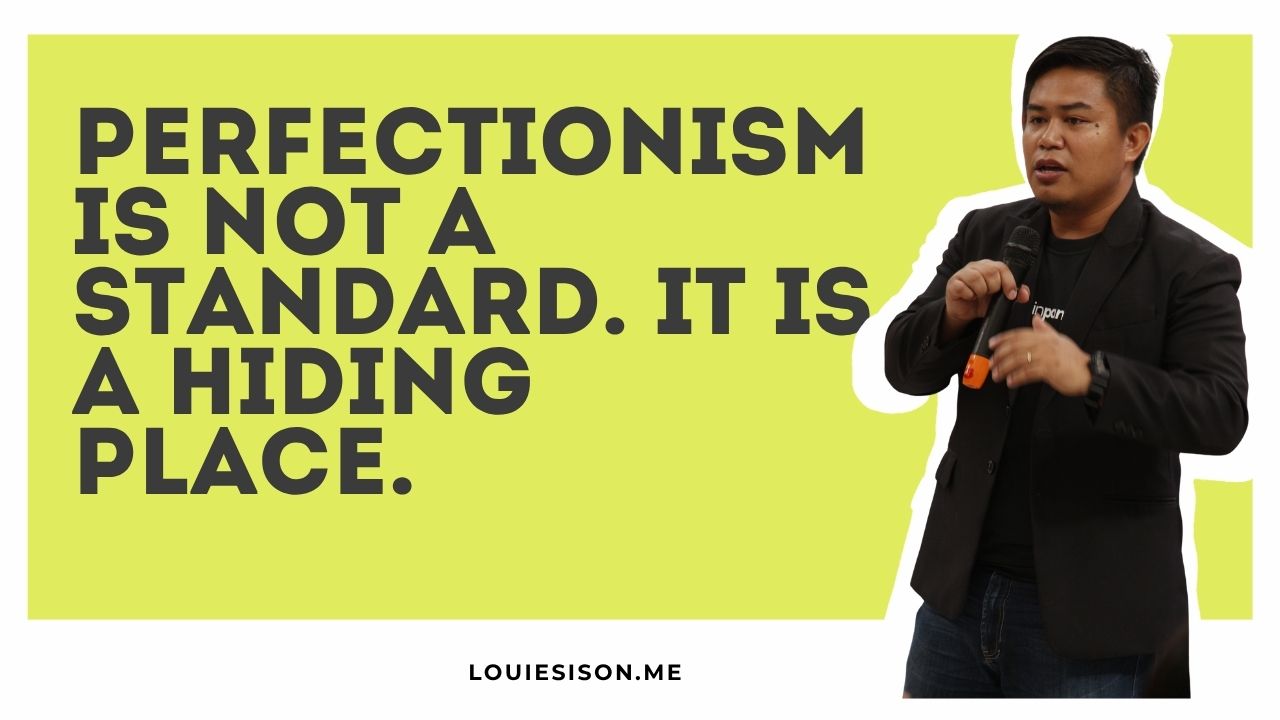
Perfectionism is not a virtue. It is not a sign of high standards or deep commitment or serious professionalism. It is, in most cases, fear dressed up in respectable clothing. Fear of judgment. Fear of criticism. Fear of putting something into the world and having it fall short of the impossibly high standard you set for it in your head.
And it is costing you more than you realize.
Not in quality. In output. In momentum. In the compounding results that only come from consistently shipping work into the world even when that work is not yet everything you want it to be.
The person waiting until everything is perfect before they launch, post, publish, pitch, or show up is not being professional. They are being invisible. And invisible does not build anything.
Where Perfectionism Actually Comes From
Nobody is born a perfectionist.
It gets learned. Usually early. Usually in an environment where mistakes were treated as something to be ashamed of rather than something to learn from. Where getting it wrong meant something about who you were rather than simply what you did.
And so the brain, being the remarkably adaptive thing that it is, developed a strategy. If I never put anything out there that is less than perfect, I never have to feel the sting of being told it is not good enough.
The strategy works. In a very narrow, very expensive way. It protects you from criticism by ensuring you never produce enough to be criticized.
That is not protection. That is self-imposed limitation with a sophisticated justification attached to it.
What Productive Actually Means
Productive does not mean busy.
This is an important distinction because a lot of perfectionists are extraordinarily busy. They are tweaking and refining and researching and preparing and planning and optimizing. All day. Every day. Producing enormous amounts of activity that never quite crosses the finish line into something the world can actually see and respond to.
Productive means output. Real, tangible, finished enough to ship output.
Not perfect output. Finished enough output. There is a meaningful difference between those two things and the gap between them is where most perfectionist entrepreneurs are permanently stuck.
Finished and imperfect and in the hands of the people it was meant to serve is always more valuable than perfect and still sitting on your hard drive.
Always.
The Market Cannot Give You Feedback on Something You Never Released
Here is the practical problem with perfectionism that nobody talks about enough.
You cannot improve what you have not released.
All the tweaking and refining you do in isolation is based on your own assumptions about what is good and what needs work. But your assumptions are not data. They are guesses. Educated guesses sometimes, but guesses nonetheless.
The only real feedback comes from actual humans encountering your actual work in the actual world. And that feedback, even when it is critical, even when it reveals flaws you missed, is worth more than a thousand more hours of internal refinement.
The market will tell you what to fix. But only if you give it something to respond to.
Release the thing. Get the feedback. Improve based on reality rather than assumption. Release again. That cycle, repeated consistently, produces better work faster than any amount of pre-release perfecting ever could.
Done Is a Strategy. Perfection Is a Delay.
Think about the most prolific people in any creative or entrepreneurial field.
They are almost never the ones who produced the least amount of work while obsessing over every detail of each piece. They are the ones who produced the most. Who shipped consistently. Who were willing to put out work that was good but not flawless because they understood that volume and consistency compound in ways that occasional brilliance never quite does.
The writer who publishes one perfect article a year will always lose to the writer who publishes one good article every week. Not because good beats perfect in a direct comparison. But because the weekly writer is learning faster, building an audience faster, getting feedback faster, and improving faster than the annual perfectionist could ever keep up with.
Done is not the enemy of great. Done is the path to great.
How to Break the Perfectionism Habit
This is where the practical work begins.
The first thing is to set a done threshold instead of a perfect threshold. Before you start any piece of work, define specifically what done looks like. Not what perfect looks like. What done looks like. What is the minimum standard this needs to meet before it goes out into the world? Then hold yourself to that standard and nothing more.
The second thing is to set a deadline and honor it the way you would honor a commitment to someone else. Perfectionism thrives in open-ended timelines. It feeds on the belief that there is always more time to improve. A hard deadline removes that option and forces you to ship with what you have.
The third thing is to reframe what putting out imperfect work actually means. It does not mean you have low standards. It means you have the courage to be seen. It means you value impact over appearance. It means you are confident enough in your direction to move forward without needing every detail to be flawless before you do.
That is not lowering the bar. That is choosing the right bar.
Progress Has a Compounding Effect. Perfection Does Not.
Here is what I have noticed about people who eventually produce remarkable work.
They did not start with remarkable work. They started with available work. The best they could do right now with what they currently had. And then they shipped it. And learned from it. And did the next one slightly better. And the one after that slightly better again.
Over time, that compounding progression produced a quality of work that the perfectionist who never shipped anything could not touch. Not because they were more talented. Because they were more productive. Because they stayed in motion long enough for the motion itself to build the skill.
Productivity compounds. Perfectionism stagnates.
You do not need everything to be perfect before you begin. You need to begin. And then keep going. And trust that the doing is what produces the becoming, not the other way around.
Ship the thing. Learn from it. Do the next one better.
That is the whole strategy.
Louie
What is one thing you have been sitting on, waiting for it to be perfect before you release it? Set a deadline for it today. Ship it by then. See what happens.